


Empathy: Theoretical perspectives, evolutionary origins, and explanatory mechanisms
Article Sidebar
Main Article Content
Abstract
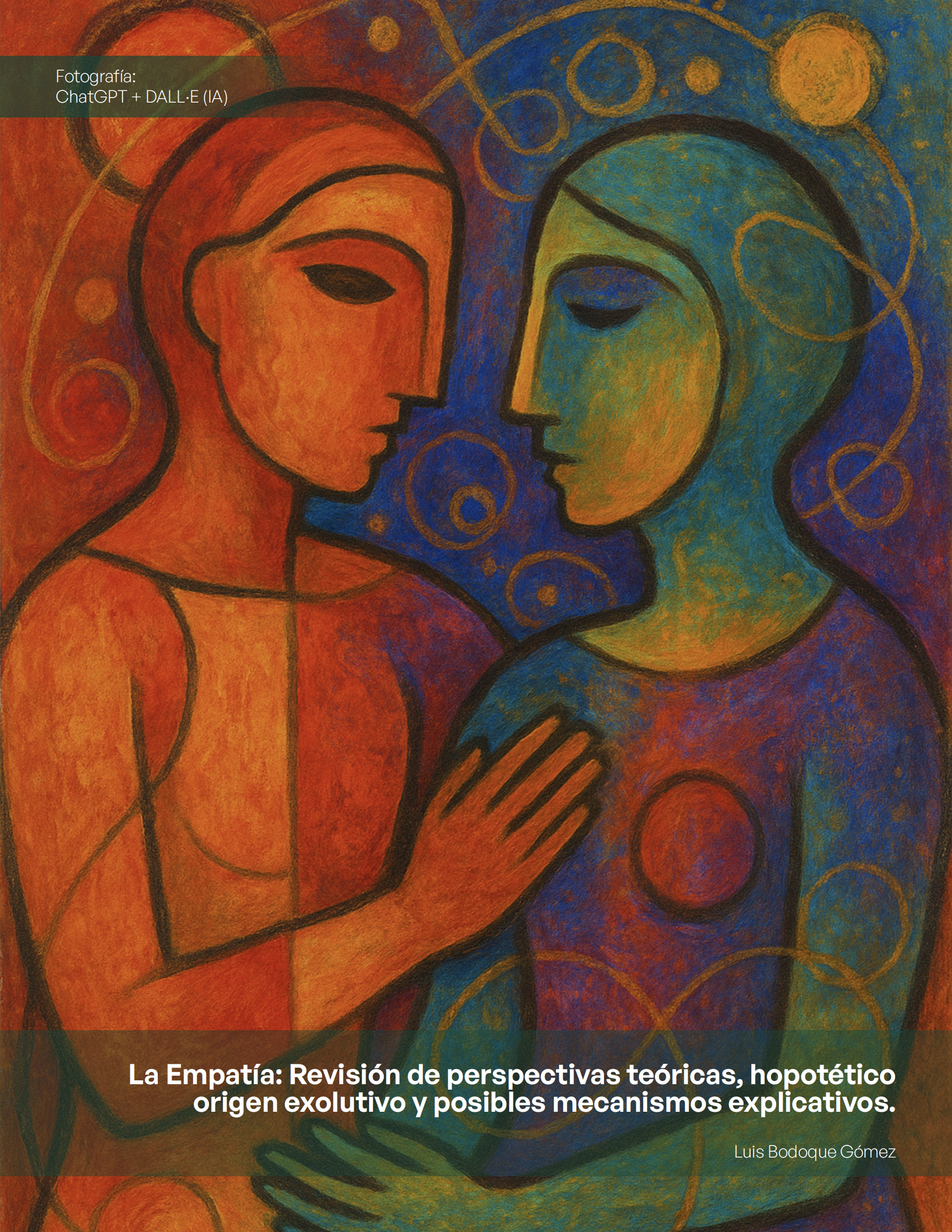
This article addresses the study of empathy from an interdisciplinary perspective that integrates philosophy, psychology, neuroscience, and evolutionary biology. Starting from the problem of its definition—often reduced to the slogan "putting oneself in another's shoes"—it conducts a comprehensive review of the main theories that have attempted to explain this ability (simulation theory, theory-theory, ”enactivist”, and phenomenological approaches), aiming to overcome partial perspectives. A unifying hypothesis is proposed, arguing that, from a psycho-evolutionary standpoint, this skill emerges as a mimetic adaptation aimed at compensating for a progressive deficiency in the genetic transmission of behaviors, facilitated by increasing “encephalization” and consequent “altriciality” resulting from premature births. Psychological, it is supported by a "supramodal" automatic inference mechanism, triggered by the perception of others' intentional acts and mediated by mirror neuron systems. Finally, it is concluded that empathy operates as an integral and "embodied" cognitive-affective process that, far from being mere projection or emotional contagion, allows for a unique understanding of others' inner worlds through the recreation of their intentionality.
Article Details

This work is licensed under a Creative Commons Attribution-NonCommercial-NoDerivatives 4.0 International License.

This work is licensed under a Creative Commons Attribution-NonCommercial-NoDerivs 3.0 Unported License.